
Your Website Is More Than a Message. It’s a Moment of Connection.
When a potential client visits your therapy website, they are doing more than gathering information. Their nervous system is scanning for cues of safety, resonance, and relationship. In the seconds after they land on your homepage, they are subconsciously asking: Does this person understand people like me?
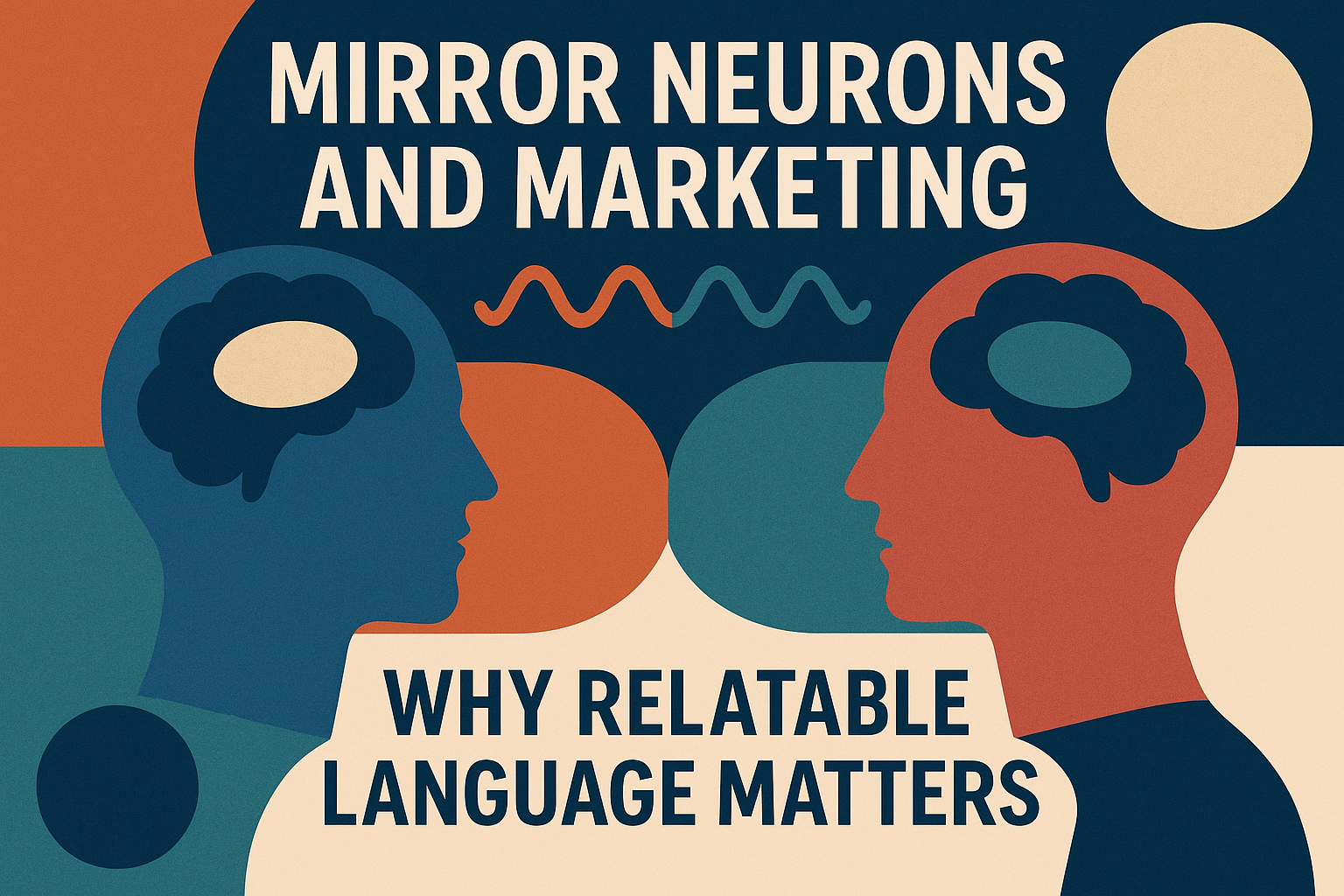
You already know that therapeutic change happens in relationship. That same principle applies to your website. What you write, and how you write it, can begin to establish the conditions for trust. This happens, in part, through a biological process involving mirror neurons.
Mirror neurons help the brain connect with others, not just by observing actions, but by sensing and feeling what another person might be experiencing. When your words reflect the inner world of your ideal client, you are not just describing therapy. You are helping them feel seen.
Learn More About My Writing Services for Therapists
What Are Mirror Neurons, and What Do They Have to Do With Website Copy?
Mirror neurons are a type of brain cell that fires both when we perform an action and when we see someone else perform that action. They are what allow us to feel empathy, understand emotional expressions, and instinctively respond to another’s experience. They help us attune, reflect, and connect.
Although most of the research around mirror neurons focuses on physical imitation or emotional empathy in real-life interactions, the same concept applies when we read emotionally resonant language. The brain does not differentiate much between a real interaction and a vividly described one. When someone reads content that accurately reflects their inner thoughts or emotional experiences, their brain responds similarly to how it would in a warm, in-person conversation.
This is why certain phrases make people pause, reread, or quietly say to themselves, “Yes, that’s me.” It is not about clever writing. It is about neurological attunement.
Generic Language Fails to Create That Response
Many therapy websites unintentionally fall into patterns of language that feel removed, abstract, or overly clinical. This often happens because therapists are taught to write academically or because they worry about sounding too informal. But abstract terms do not tend to spark recognition in the reader’s nervous system.
Let’s look at a common example.
Clinical phrasing:
“I offer evidence-based treatment for anxiety, depression, and trauma, using an integrative therapeutic model tailored to client needs.”
This may be accurate, but it is hard to feel emotionally engaged with this sentence. It places the focus on theory and method rather than on the person reading it.
Now compare it to this version:
Relational phrasing:
“You might wake up already feeling anxious, your thoughts racing before your feet even hit the floor. Or you move through the day in a fog, wondering why everything feels heavy, even though nothing is wrong on the surface. Therapy can help you make sense of what’s happening and feel more grounded in your day-to-day life.”
The second version is more vivid, more relatable, and more neurologically engaging. It reflects lived experience, uses gentle emotional language, and offers a clear path forward. It speaks to the part of the brain that is asking, Do I belong here? Can I trust this?
Relatable Language Engages the Body, Not Just the Mind
You are not just writing to a reader’s intellect. You are speaking to their nervous system. In many cases, people searching for a therapist are already dysregulated. They may feel overwhelmed, numb, or unsure about whether therapy can really help. When your words meet them where they are, using calm rhythm, gentle imagery, and clear reassurance, you are offering more than information. You are offering co-regulation.
This is not about being poetic or flowery. It is about writing with the same presence you bring into the therapy room. Your tone matters. Your sentence structure matters. The feeling behind your words matters.
How to Apply This to Your Own Website Content
Here are some specific techniques you can use to write in a way that activates connection and empathy:
Start with emotional experiences.
Begin your content by reflecting what your ideal client may be going through. Speak to the moments they don’t often say out loud. For example: “You might be the one others rely on, the one who keeps everything together. But inside, you’re exhausted, anxious, or wondering if it’s always going to feel this hard.”
Use language clients would actually say.
If your clients rarely use terms like “cognitive distortions” or “attachment dysregulation,” then you probably shouldn’t either, at least not without explanation. Instead, use phrases like “spiraling thoughts,” “overreacting and not knowing why,” or “feeling stuck in the same patterns.”
Mirror internal dialogue.
Many people carry private thoughts they’re not sure they should say aloud. When your copy gently reflects those thoughts, you signal deep understanding. For instance: “You tell yourself you should be able to handle this. You’re smart, capable, and used to figuring things out on your own. But lately, it hasn’t been working.”
Invite without pressure.
End with clear, kind next steps that feel safe to act on. For example: “If you’re wondering whether therapy might help, I offer a free consultation where we can talk through your questions and see if working together feels like a good fit.”
Create rhythm and calm through structure.
Use short paragraphs, simple punctuation, and clean formatting. This helps reduce cognitive strain and supports a sense of flow. The easier your site is to read, the easier it is to stay.
Trust Yourself to Write Like a Real Person
You do not need to sound like a marketing expert or a neuroscientist. You already know how to build trust, hold space, and create safety through your presence. Relatable writing is just another form of attunement. It allows potential clients to sense that you will understand them long before they walk through your door.
If your writing reflects your values, your voice, and your capacity to meet people where they are, you are already doing it right.
Final Thought and Invitation
When you write in a way that mirrors what your clients feel, their brain responds with familiarity and trust. This is not just good writing. It is good clinical practice. It is relational, grounded, and deeply human.
If you would like help bringing this kind of language to your website, I would be honored to collaborate with you. Together, we can craft content that supports connection, builds safety, and reflects the heart of your work.